How the System Really Works

How to benefit from local organic fertilizer initiatives

Local organic fertilizer initiatives are often framed in idealistic terms: circularity, sustainability, short supply chains. For distributors, however, the relevant question is not whether these initiatives are good, but what role they play inside a well functioning fertilizer scheme.
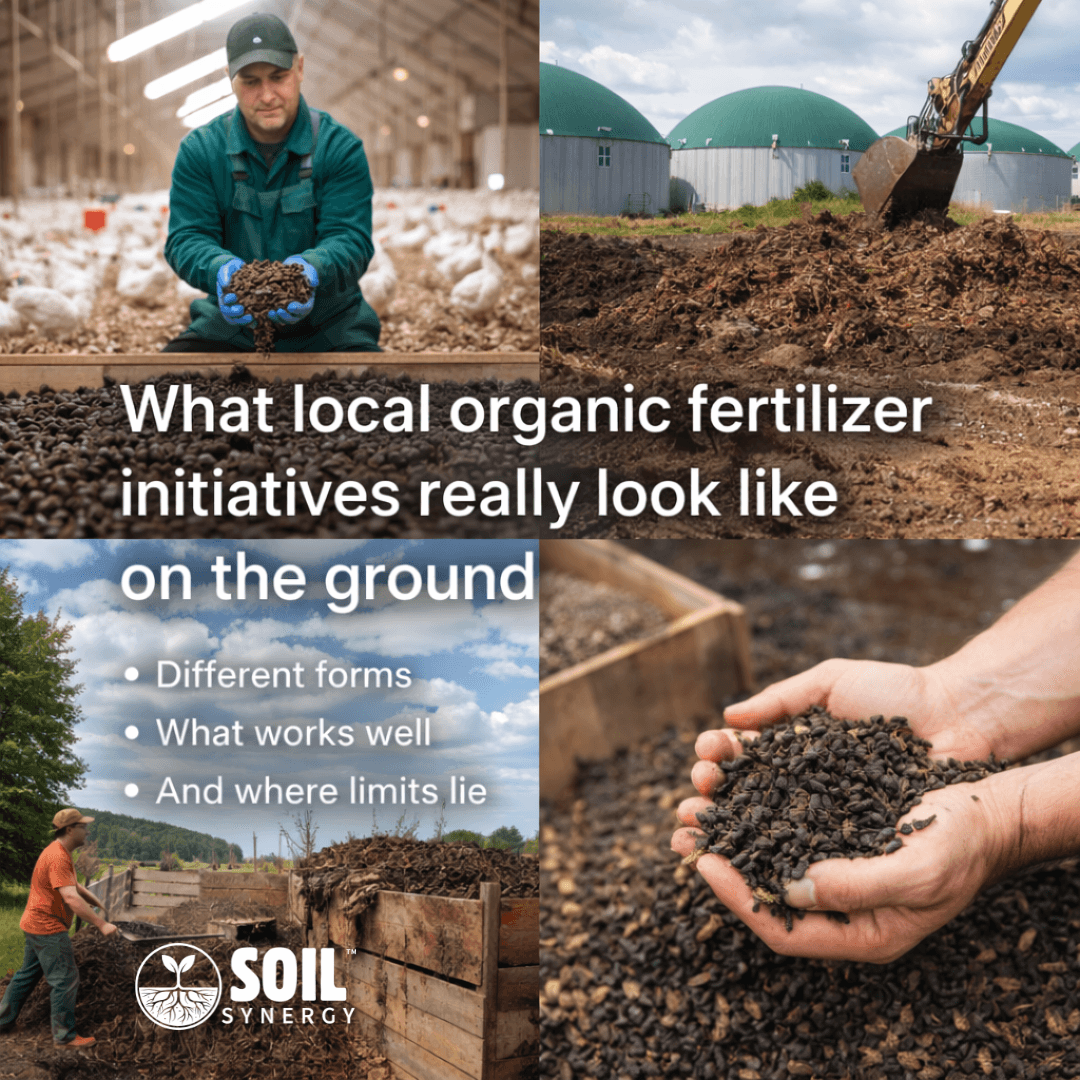
What local organic fertilizer initiatives really look like


1. Local organic fertilizer initiatives are not one model

“Local production” is not a single category. In practice, distributors encounter four structurally different systems, each with distinct commercial and agronomic implications.

a) Manure-based systems (livestock regions)

Typical examples

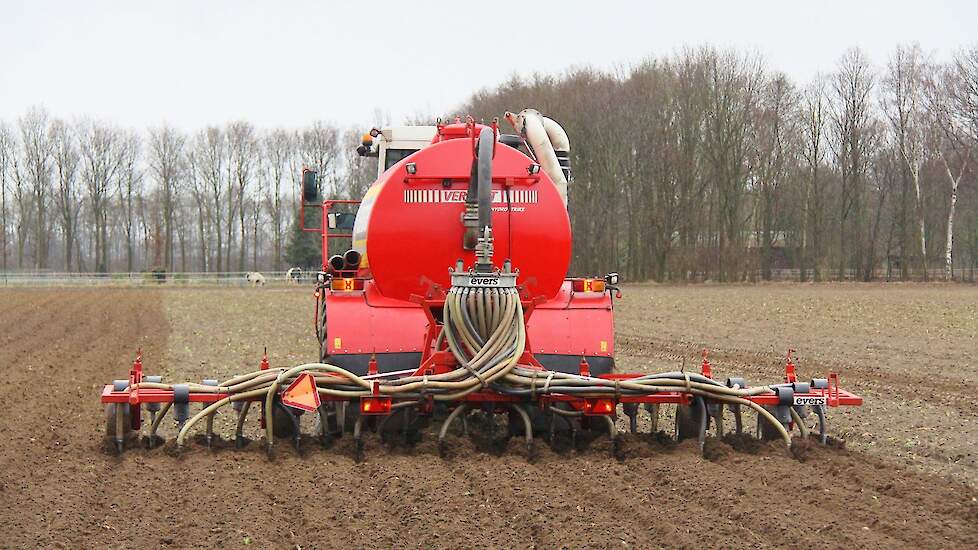
  • Poultry manure drying and pelletisation

  • Cattle or pig manure processing

Where this dominates

  • Netherlands, Belgium, Germany

  • Northern Italy, Spain

  • Parts of the US Midwest and China

Strengths

  • High nutrient availability (especially N and P)

  • Strong regulatory push to manage manure surpluses

  • Technically mature and bankable systems

Structural constraints

  • Odour, permitting, public resistance

  • Transport costs limit purely local use

  • Surplus volumes almost always require export

In regions like the Netherlands, over 300,000 tonnes of manure-based fertilizer pellets are exported annually, growing ~15% per year since 2016 [1][2].

b) Biogas & digestate projects

Typical examples

  • Anaerobic digestion of manure, crop residues, food waste

  • Digestate applied locally or further processed

Where this dominates

  • Germany, France, Denmark

  • Italy, Spain

  • Increasingly Latin America and Eastern Europe

Strengths

  • Dual output: energy + nutrients

  • Strong government incentives

  • Logical local nutrient recycling

Structural constraints

  • Digestate quality varies significantly

  • Drying, concentration and pelletising are capital-intensive

  • Local land base often insufficient to absorb full output

Many digestate projects ultimately face the same issue as manure systems: local recycling works — until volume exceeds local demand [3][4].

c) Composting initiatives

Typical examples

  • Municipal green waste compost

  • Agricultural residue composting

  • Cooperative compost yards

Where this dominates

  • France, Spain, Italy

  • Parts of Africa and Latin America

  • Urban-adjacent farming regions

Strengths

  • Excellent soil organic matter input

  • High social acceptance

  • Low technological barrier

Structural constraints

  • Low nutrient density

  • High transport cost per nutrient unit

  • Limited relevance for nutrient-intensive crops

From a distributor view, compost is a soil amendment, not a primary fertilizer — and behaves as such in logistics and pricing [5].

d) Insect-based systems

Typical examples

  • Black soldier fly larvae fed on food waste

  • Frass used as organic fertilizer

Where this is emerging

  • Netherlands, France, UK

  • Southeast Asia

  • Parts of Africa

Strengths

  • Extremely efficient waste conversion

  • High-value residue

  • Strong innovation and investor interest

Structural constraints

  • Still limited in volume

  • Regulatory frameworks differ widely

  • Not yet suitable for broad-acre demand

The insect fertilizer segment is projected to grow >20% annually, but from a small base [6].
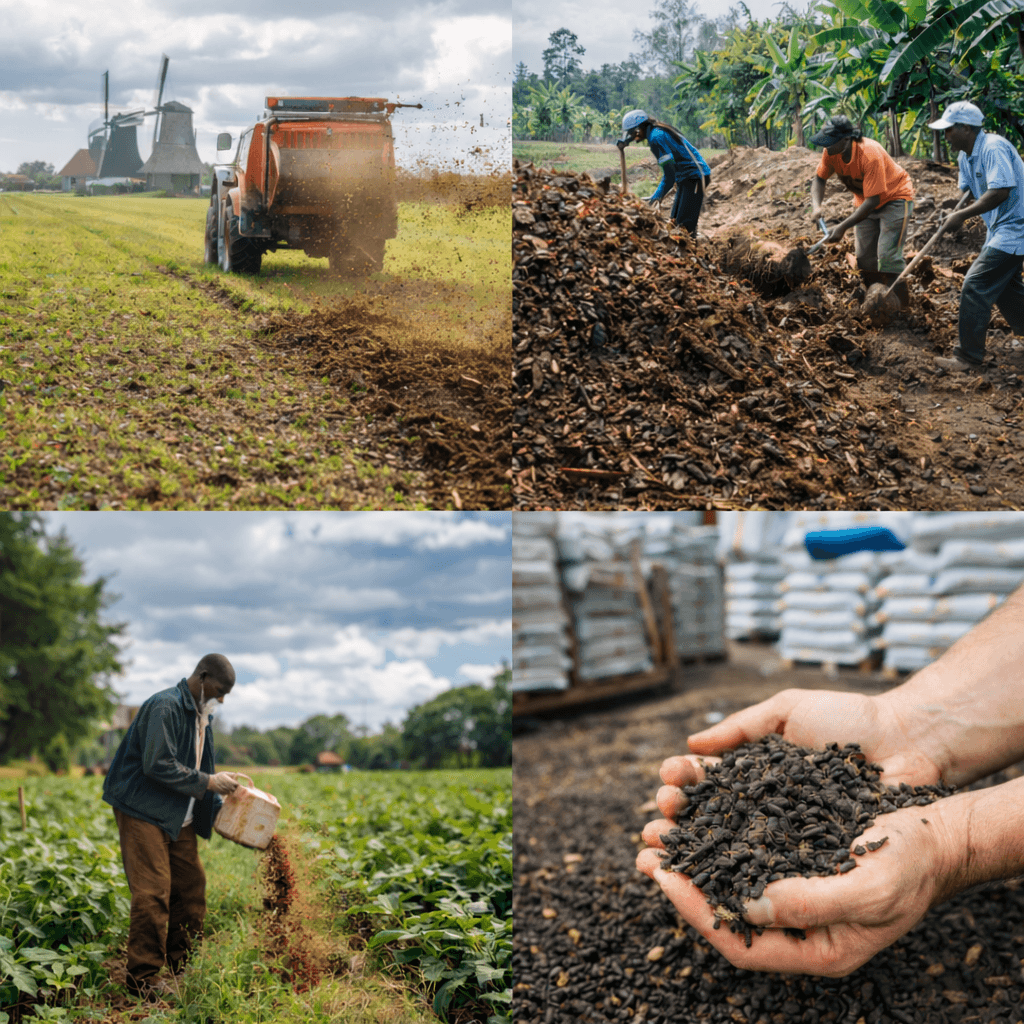
2. What local initiatives consistently do well

Across all regions and systems, distributors observe three reliable strengths:

  1. Closing short nutrient loops
    Local residues are converted into usable inputs instead of becoming waste [7].

  2. Improving soil structure
    Organic matter input is often more important locally than nutrient concentration.

  3. Political and social acceptance
    Local production aligns with public policy and sustainability narratives.

These benefits are real — and increasingly relevant.

3. Where local initiatives struggle, operational reality

From a distribution and supply-chain perspective, the same structural limits appear repeatedly:

  • Inconsistent output
    Feedstock availability and seasonality affect nutrient composition.

  • Limited scalable volume
    Most local systems are not designed to supply thousands of hectares.

  • Policy dependency
    Many projects rely on subsidies or regulatory pressure to remain viable.

This is not a failure, it is the inevitable outcome of biology meeting the economic reality. [8].

4. Regional practice cases distributors recognise

Europe

Local initiatives solve manure pressure, but exports remain structurally necessary. Processed pellets flow to Southern Europe, Eastern Europe and Asia [1][2].

Southeast Asia

Local composting and digestate projects improve soil structure, but nutrient deficits remain, driving demand for imported organic fertilizers [9].

Latin America

Local compost and biogas initiatives are expanding, yet export crops require consistent, high-analysis inputs that local systems cannot supply year-round [10].

Africa

Local initiatives slowly but surely improve soil fertility, but input gaps remain large, especially for phosphorus and potassium [11].

5. The overlooked role of local initiatives in the global system

Here is the key insight for distributors:

Local initiatives are not designed to replace international flows.
They are designed to stabilise them.

They:

  • reduce pressure in surplus regions

  • improve baseline soil health locally

  • lower total system costs

But they do not eliminate the need for:

  • concentrated products

  • predictable volumes

  • professional processing

  • cross-regional nutrient redistribution

In practice, the most resilient systems combine local inputs with scalable supply chains [12].

6. The real lesson for distributors

This is not a debate about local versus international.

It is about fit-for-purpose systems.

  • Local initiatives handle residues, organic matter and soil resilience

  • Scalable production handles volume, consistency and redistribution

  • Farmers increasingly use both — depending on crop, soil and region

Distributors who understand these layers, instead of selling sustainability, are best positioned as the market matures and can benefit from both local production and imports.

Sources

[1] Dutch Ministry of Agriculture – Manure processing and export statistics
[2] Wageningen Economic Research – Manure valorisation and pellet exports
[3] European Biogas Association – Digestate markets in Europe
[4] IEA Bioenergy – Digestate management and nutrient recovery
[5] FAO – Compost use in sustainable agriculture
[6] Rabobank – Insect protein & fertilizer market outlook
[7] European Commission – Circular economy action plan
[8] OECD – Nutrient balances and agricultural logistics
[9] FAO Asia-Pacific – Soil degradation and nutrient demand
[10] Inter-American Development Bank – Organic inputs in export agriculture
[11] IFDC – Soil fertility constraints in Sub-Saharan Africa
[12] World Bank – Global nutrient flows and fertilizer trade


1. Local organic fertilizer initiatives are not one model

“Local production” is not a single category. In practice, distributors encounter four structurally different systems, each with distinct commercial and agronomic implications.

a) Manure-based systems (livestock regions)

Typical examples

  • Poultry manure drying and pelletisation

  • Cattle or pig manure processing

Where this dominates

  • Netherlands, Belgium, Germany

  • Northern Italy, Spain

  • Parts of the US Midwest and China

Strengths

  • High nutrient availability (especially N and P)

  • Strong regulatory push to manage manure surpluses

  • Technically mature and bankable systems

Structural constraints

  • Odour, permitting, public resistance

  • Transport costs limit purely local use

  • Surplus volumes almost always require export

In regions like the Netherlands, over 300,000 tonnes of manure-based fertilizer pellets are exported annually, growing ~15% per year since 2016 [1][2].

b) Biogas & digestate projects

Typical examples

  • Anaerobic digestion of manure, crop residues, food waste

  • Digestate applied locally or further processed

Where this dominates

  • Germany, France, Denmark

  • Italy, Spain

  • Increasingly Latin America and Eastern Europe

Strengths

  • Dual output: energy + nutrients

  • Strong government incentives

  • Logical local nutrient recycling

Structural constraints

  • Digestate quality varies significantly

  • Drying, concentration and pelletising are capital-intensive

  • Local land base often insufficient to absorb full output

Many digestate projects ultimately face the same issue as manure systems: local recycling works — until volume exceeds local demand [3][4].

c) Composting initiatives

Typical examples

  • Municipal green waste compost

  • Agricultural residue composting

  • Cooperative compost yards

Where this dominates

  • France, Spain, Italy

  • Parts of Africa and Latin America

  • Urban-adjacent farming regions

Strengths

  • Excellent soil organic matter input

  • High social acceptance

  • Low technological barrier

Structural constraints

  • Low nutrient density

  • High transport cost per nutrient unit

  • Limited relevance for nutrient-intensive crops

From a distributor view, compost is a soil amendment, not a primary fertilizer — and behaves as such in logistics and pricing [5].

d) Insect-based systems

Typical examples

  • Black soldier fly larvae fed on food waste

  • Frass used as organic fertilizer

Where this is emerging

  • Netherlands, France, UK

  • Southeast Asia

  • Parts of Africa

Strengths

  • Extremely efficient waste conversion

  • High-value residue

  • Strong innovation and investor interest

Structural constraints

  • Still limited in volume

  • Regulatory frameworks differ widely

  • Not yet suitable for broad-acre demand

The insect fertilizer segment is projected to grow >20% annually, but from a small base [6].

2. What local initiatives consistently do well

Across all regions and systems, distributors observe three reliable strengths:

  1. Closing short nutrient loops
    Local residues are converted into usable inputs instead of becoming waste [7].

  2. Improving soil structure
    Organic matter input is often more important locally than nutrient concentration.

  3. Political and social acceptance
    Local production aligns with public policy and sustainability narratives.

These benefits are real — and increasingly relevant.

3. Where local initiatives struggle, operational reality

From a distribution and supply-chain perspective, the same structural limits appear repeatedly:

  • Inconsistent output
    Feedstock availability and seasonality affect nutrient composition.

  • Limited scalable volume
    Most local systems are not designed to supply thousands of hectares.

  • Policy dependency
    Many projects rely on subsidies or regulatory pressure to remain viable.

This is not a failure, it is the inevitable outcome of biology meeting the economic reality. [8].

4. Regional practice cases distributors recognise

Europe

Local initiatives solve manure pressure, but exports remain structurally necessary. Processed pellets flow to Southern Europe, Eastern Europe and Asia [1][2].

Southeast Asia

Local composting and digestate projects improve soil structure, but nutrient deficits remain, driving demand for imported organic fertilizers [9].

Latin America

Local compost and biogas initiatives are expanding, yet export crops require consistent, high-analysis inputs that local systems cannot supply year-round [10].

Africa

Local initiatives slowly but surely improve soil fertility, but input gaps remain large, especially for phosphorus and potassium [11].

5. The overlooked role of local initiatives in the global system

Here is the key insight for distributors:

Local initiatives are not designed to replace international flows.
They are designed to stabilise them.

They:

  • reduce pressure in surplus regions

  • improve baseline soil health locally

  • lower total system costs

But they do not eliminate the need for:

  • concentrated products

  • predictable volumes

  • professional processing

  • cross-regional nutrient redistribution

In practice, the most resilient systems combine local inputs with scalable supply chains [12].

6. The real lesson for distributors

This is not a debate about local versus international.

It is about fit-for-purpose systems.

  • Local initiatives handle residues, organic matter and soil resilience

  • Scalable production handles volume, consistency and redistribution

  • Farmers increasingly use both — depending on crop, soil and region

Distributors who understand these layers, instead of selling sustainability, are best positioned as the market matures and can benefit from both local production and imports.

Sources

[1] Dutch Ministry of Agriculture – Manure processing and export statistics
[2] Wageningen Economic Research – Manure valorisation and pellet exports
[3] European Biogas Association – Digestate markets in Europe
[4] IEA Bioenergy – Digestate management and nutrient recovery
[5] FAO – Compost use in sustainable agriculture
[6] Rabobank – Insect protein & fertilizer market outlook
[7] European Commission – Circular economy action plan
[8] OECD – Nutrient balances and agricultural logistics
[9] FAO Asia-Pacific – Soil degradation and nutrient demand
[10] Inter-American Development Bank – Organic inputs in export agriculture
[11] IFDC – Soil fertility constraints in Sub-Saharan Africa
[12] World Bank – Global nutrient flows and fertilizer trade
Field

Grow something great together.

Grow something great together.

Grow something great together.

Whether you're exploring a new product line or looking for a reliable long-term supplier -we supply high-value organic fertilizers with a unique value for money that help distributors stand out.
Icon
Honest
Icon
Long-Term
Icon
Functional