Context & Markets

New Law - Major Impact on the European Fertiliser Market from 2026

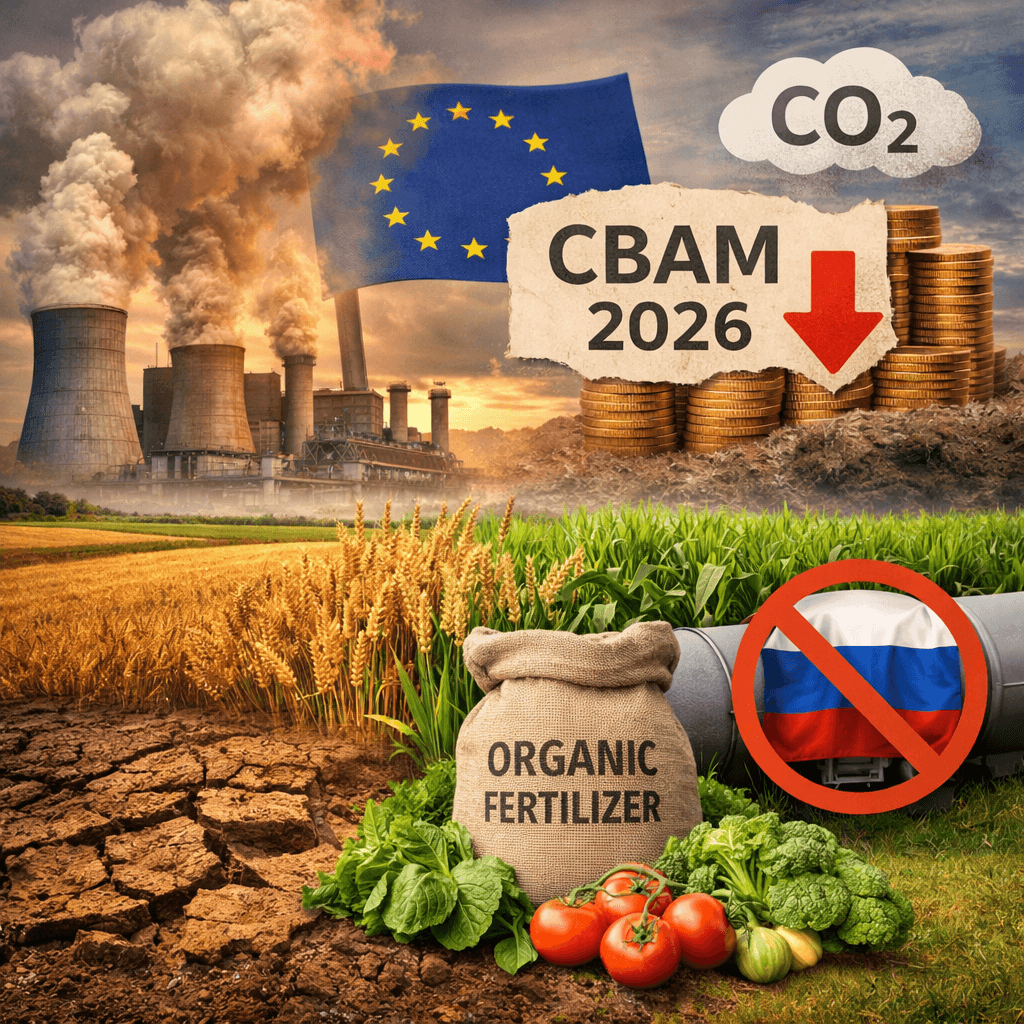
CBAM law and the impact on EU fertilizer markets
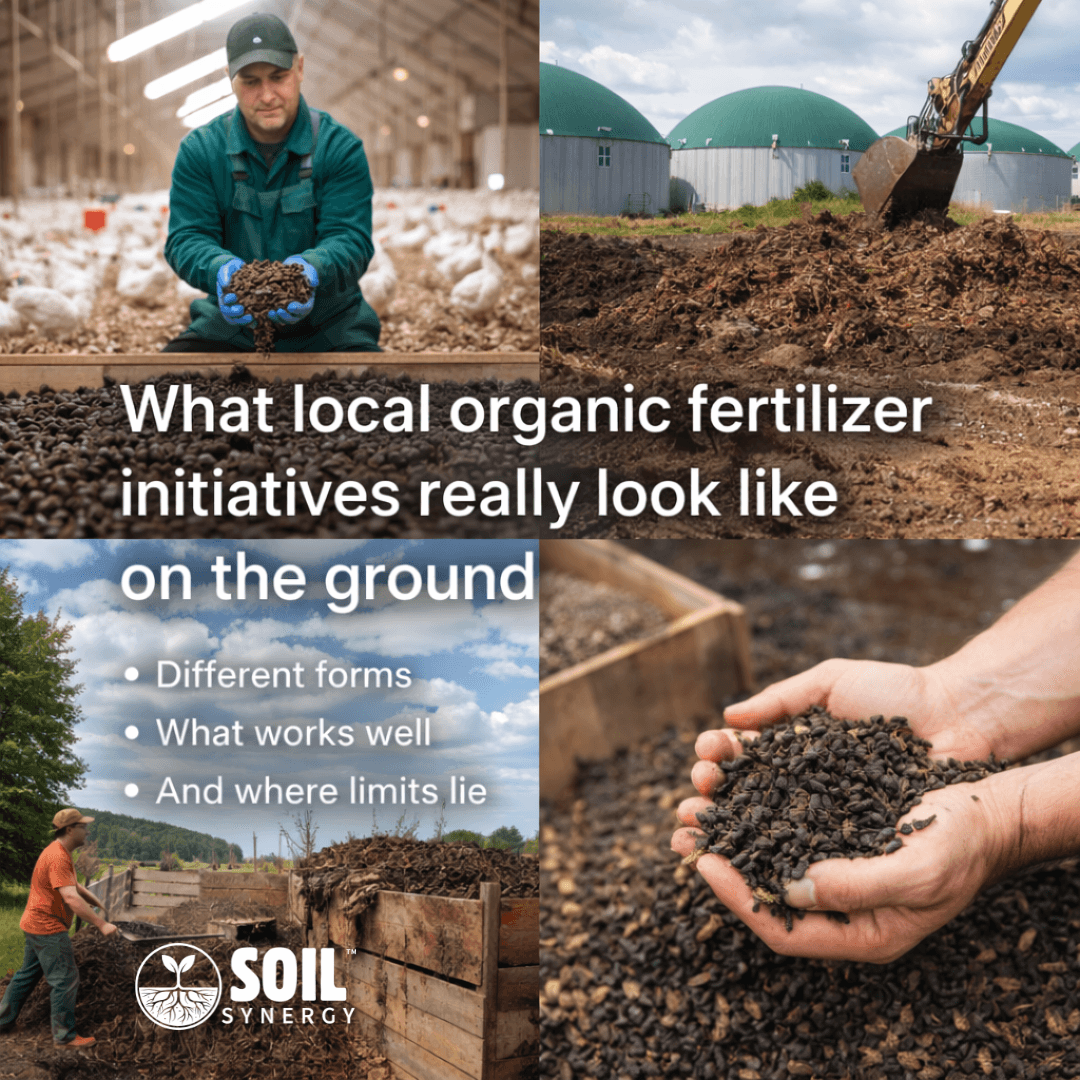
What local organic fertilizer initiatives really look like

Why organic fertilisers will gain structural relevance

From 2026 onwards, the European fertiliser market will undergo a fundamental shift. New climate regulation, geopolitical restrictions and growing cost volatility are changing fertiliser economics at their core. What was once a relatively predictable market is moving towards higher prices, reduced certainty and increased supply risk.

At the centre of this shift is the introduction of the Carbon Border Adjustment Mechanism (CBAM), combined with ongoing sanctions on Russian fertilisers.

CBAM reshapes the cost structure of fertilisers

CBAM is designed to ensure a level playing field by pricing the CO₂ emissions of imported products. For fertilisers — particularly nitrogen-based mineral fertilisers, this has a direct and lasting impact.

CBAM is closely linked to the gradual phase-out of free emission allowances under the EU Emissions Trading System (ETS), starting in 2026 and reaching zero by 2034. As these allowances disappear, CO₂ emissions become an increasingly significant and unavoidable cost component.

With current ETS prices around €80 per tonne of CO₂, and realistic scenarios pointing towards €150 per tonne — mineral fertilisers are expected to become structurally more expensive, not temporarily, but year after year.

Uncertainty becomes a structural market factor

A key issue is that detailed CBAM tariffs will only be finalised at the end of Q1 2026, with retroactive effect. This creates substantial uncertainty across the supply chain.

As a result:

  • importers hesitate to plan volumes beyond January 2026

  • forward purchasing and stock building become riskier

  • availability later in the season becomes harder to guarantee

This uncertainty does not only affect pricing, but also reliability of supply, which is critical for agricultural planning.

Sanctions on Russian fertilisers increase pressure

Sanctions on Russian fertilisers further tighten the European market. Russia has historically been a key supplier of high-quality, low-cadmium phosphate, essential for compliance with European quality standards and certification schemes.

With these volumes largely removed from the European market:

  • availability of high-quality mineral inputs decreases

  • prices of remaining compliant sources increase

  • switching suppliers becomes more complex due to REACH registration, CO₂ reporting and CBAM compliance

The combined effect is a fertiliser market with less flexibility and higher structural risk.

Why organic fertilisers gain relevance under CBAM

Against this backdrop, organic fertilisers gain strategic relevance — not as a niche solution, but as a risk-mitigating input.

Organic fertilisers typically:

  • are not produced via energy-intensive Haber-Bosch processes

  • have a significantly lower exposure to fossil energy price volatility

  • are less directly affected by ETS and CBAM cost mechanisms

As mineral fertilisers become more expensive and uncertain in availability, growers and distributors increasingly look for inputs that offer price stability, predictable sourcing and regulatory resilience.

Beyond price alone, CBAM accelerates a broader shift in decision-making. Farmers and distributors are no longer evaluating fertilisers solely on cost per tonne, but on:

  • cost per effective nutrient

  • long-term soil performance

  • supply security and regulatory risk

Organic fertilisers, particularly those with consistent composition and reliable logistics, fit naturally into this new evaluation framework.

2026 as a turning point

The introduction of CBAM marks a turning point rather than a temporary disruption. From 2026 onwards, the European fertiliser market moves towards a system where:

  • energy-intensive mineral inputs face structural cost increases

  • regulatory and geopolitical risks influence availability

  • resilience and predictability become key selection criteria

In this context, organic fertilisers are increasingly viewed not as an alternative, but as a strategic component of future fertiliser programmes.

Why organic fertilisers will gain structural relevance

From 2026 onwards, the European fertiliser market will undergo a fundamental shift. New climate regulation, geopolitical restrictions and growing cost volatility are changing fertiliser economics at their core. What was once a relatively predictable market is moving towards higher prices, reduced certainty and increased supply risk.

At the centre of this shift is the introduction of the Carbon Border Adjustment Mechanism (CBAM), combined with ongoing sanctions on Russian fertilisers.

CBAM reshapes the cost structure of fertilisers

CBAM is designed to ensure a level playing field by pricing the CO₂ emissions of imported products. For fertilisers — particularly nitrogen-based mineral fertilisers, this has a direct and lasting impact.

CBAM is closely linked to the gradual phase-out of free emission allowances under the EU Emissions Trading System (ETS), starting in 2026 and reaching zero by 2034. As these allowances disappear, CO₂ emissions become an increasingly significant and unavoidable cost component.

With current ETS prices around €80 per tonne of CO₂, and realistic scenarios pointing towards €150 per tonne — mineral fertilisers are expected to become structurally more expensive, not temporarily, but year after year.

Uncertainty becomes a structural market factor

A key issue is that detailed CBAM tariffs will only be finalised at the end of Q1 2026, with retroactive effect. This creates substantial uncertainty across the supply chain.

As a result:

  • importers hesitate to plan volumes beyond January 2026

  • forward purchasing and stock building become riskier

  • availability later in the season becomes harder to guarantee

This uncertainty does not only affect pricing, but also reliability of supply, which is critical for agricultural planning.

Sanctions on Russian fertilisers increase pressure

Sanctions on Russian fertilisers further tighten the European market. Russia has historically been a key supplier of high-quality, low-cadmium phosphate, essential for compliance with European quality standards and certification schemes.

With these volumes largely removed from the European market:

  • availability of high-quality mineral inputs decreases

  • prices of remaining compliant sources increase

  • switching suppliers becomes more complex due to REACH registration, CO₂ reporting and CBAM compliance

The combined effect is a fertiliser market with less flexibility and higher structural risk.

Why organic fertilisers gain relevance under CBAM

Against this backdrop, organic fertilisers gain strategic relevance — not as a niche solution, but as a risk-mitigating input.

Organic fertilisers typically:

  • are not produced via energy-intensive Haber-Bosch processes

  • have a significantly lower exposure to fossil energy price volatility

  • are less directly affected by ETS and CBAM cost mechanisms

As mineral fertilisers become more expensive and uncertain in availability, growers and distributors increasingly look for inputs that offer price stability, predictable sourcing and regulatory resilience.

Beyond price alone, CBAM accelerates a broader shift in decision-making. Farmers and distributors are no longer evaluating fertilisers solely on cost per tonne, but on:

  • cost per effective nutrient

  • long-term soil performance

  • supply security and regulatory risk

Organic fertilisers, particularly those with consistent composition and reliable logistics, fit naturally into this new evaluation framework.

2026 as a turning point

The introduction of CBAM marks a turning point rather than a temporary disruption. From 2026 onwards, the European fertiliser market moves towards a system where:

  • energy-intensive mineral inputs face structural cost increases

  • regulatory and geopolitical risks influence availability

  • resilience and predictability become key selection criteria

In this context, organic fertilisers are increasingly viewed not as an alternative, but as a strategic component of future fertiliser programmes.
Field

Grow something great together.

Grow something great together.

Grow something great together.

Whether you're exploring a new product line or looking for a reliable long-term supplier -we supply high-value organic fertilizers with a unique value for money that help distributors stand out.
Icon
Honest
Icon
Long-Term
Icon
Functional